From the farm
A look back at the Great Day of Sustainable Food organized by INRAE in Clermont-Ferrand.
There is now widespread agreement on the need to move towards a healthier, more sustainable, and more equitable food system. The impacts on public health, social inequalities, and the environment are well documented. And yet, concrete changes are slow to materialize.
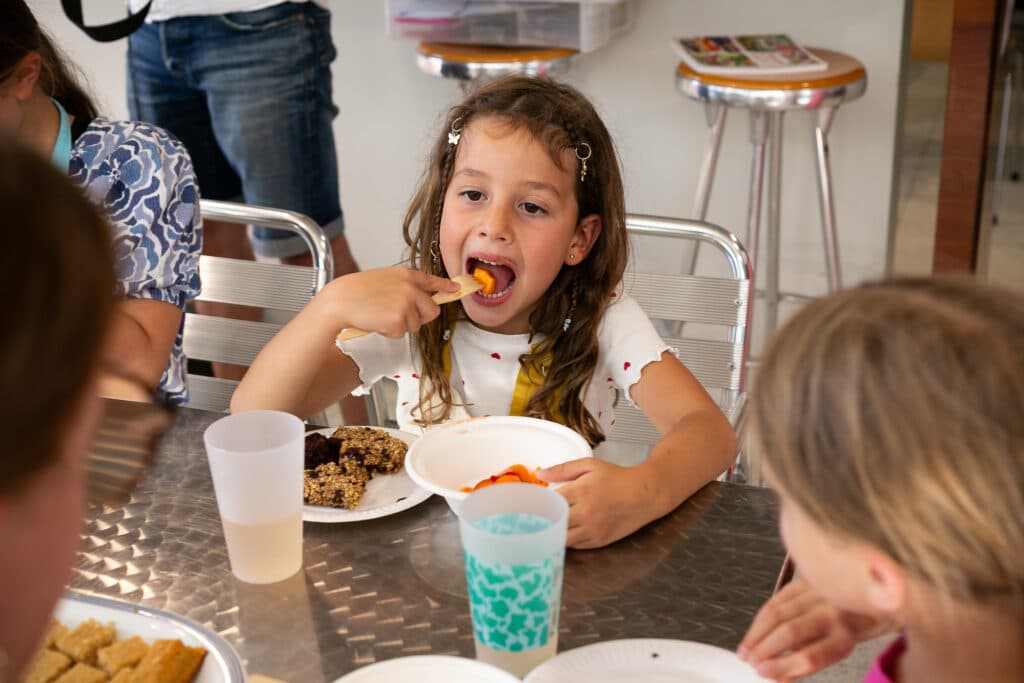
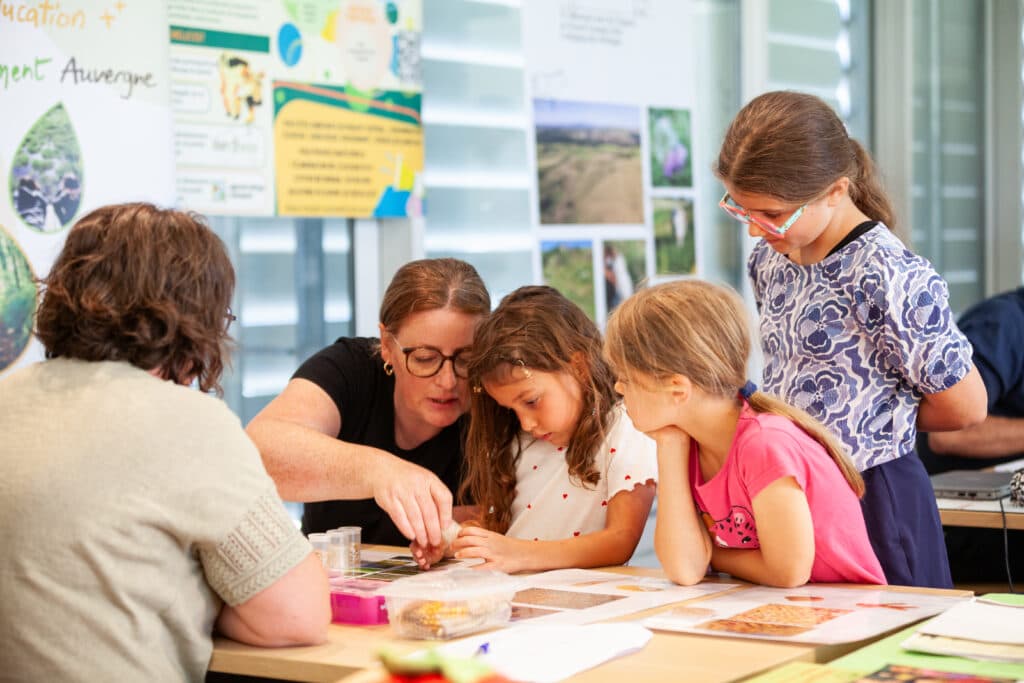
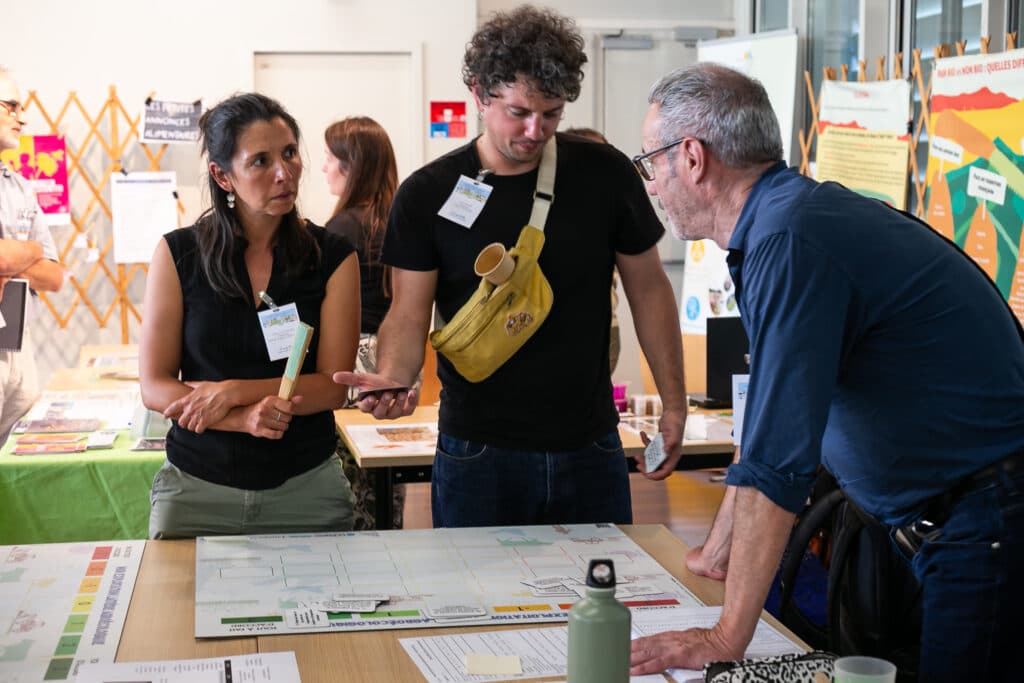
It is within this context that Plan’Eat Kids, a Living Lab in Clermont-Ferrand led by INRAE, operates. On May 27, a workshop in Clermont-Ferrand brought together researchers, local governments, nonprofit organizations, field professionals, and children around a common goal: to imagine and explore dietary practices that are healthier, more sustainable, more inclusive, and more environmentally friendly. It was within this framework that Montpellier was able to present some of its initiatives. The event served as an opportunity to bring together the three “sister” European projects: FEAST, SWITCH, and Plan’Eat, to exchange ideas and learn about the actions being carried out in various cities across France.
Montpellier’s initiatives: a commitment to universal access
Two initiatives originating in Montpellier were highlighted during the event: The Food Solidarity Houses and the Common Food Fund.
The latter is based on the principle of mutual aid: participants contribute financially according to their income and, in return, receive a virtual money that can be spent in participating partner locations. The goal is economic, geographic, and sociocultural: to guarantee everyone, including the most low-income households, effective access to high-quality, sustainable food.
This initiative raises a fundamental political question: who has the legitimacy to define what constitutes sustainable, dignified, and accessible food? To address this, the common food fund has adopted a participatory governance model, organized around a citizens’ committee, with the explicit aim of involving residents in decision-making.
The limits of participation: a necessary realism
Citizen participation, on its own, is not enough to guarantee equal access. Despite good intentions, participatory spaces can perpetuate inequalities in the ability to have a voice. Certain forums dedicated to sustainable food remain difficult for people in precarious situations to attend, not only for financial reasons but also for symbolic ones, such as feeling entitled to enter, speak up, or identify with the space.
The experience in Montpellier confirms that establishing an alternative mechanism does not automatically guarantee that it will be accessible to everyone. Participation must be carefully designed, organized, and supported. Otherwise, it risks perpetuating the very inequalities it aims to correct.
The strategic role of participatory research
SWITCH, Plan’Eat, and FEAST advocate for a view of the research field as a space for observation, experimentation, and knowledge production.
A community seeking to change its food procurement practices needs quantitative data and documented feedback. An organization advocating for dignified access to food must be able to demonstrate what works and what remains a stumbling block.
This is precisely the mission of participatory research: to transform local experiences into shareable and actionable knowledge that can inform policy debates and guide public decision-making.
Local initiatives are essential, but insufficient on their own
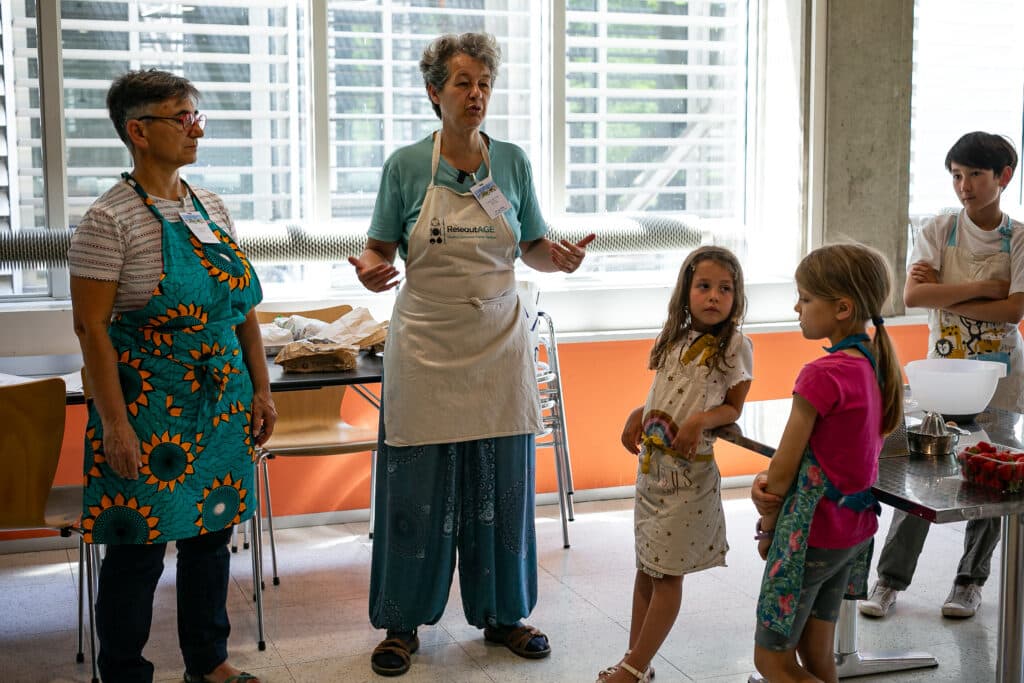
Grassroots initiatives such as cooking workshops, socially conscious cafeterias, food solidarity houses and food funds make three essential contributions:
- Tangible evidence: They demonstrate that alternative practices are possible, document their effects, and identify the conditions for their success.
- Alliances: They bring together all stakeholders in the food system around common goals.
- Legitimacy: They enable us to show decision-makers that these transformations are not utopian, that they already exist, that they work, and to identify precisely what needs to change to scale them up.
This article is inspired by the work presented at the Plan’Eat Kids conference organized by INRAE in Clermont-Ferrand on May 27, 2025, as part of the European projects PLAN’EAT, FEAST, and SWITCH.