Event
In Montpellier, SWITCH facilitated a sensory walk “from farm to table.”
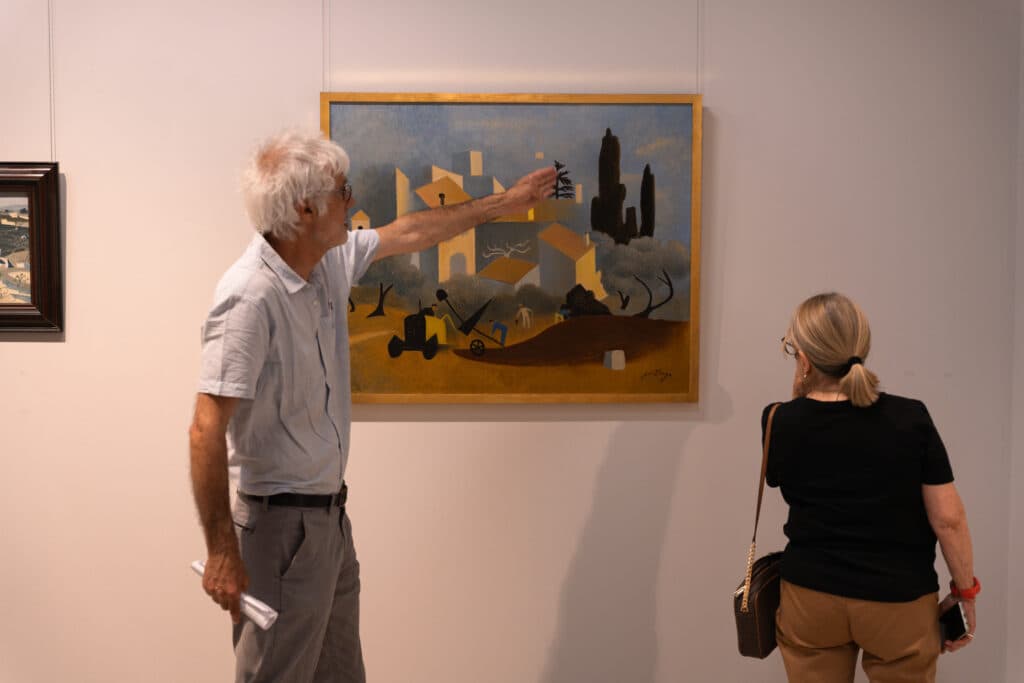
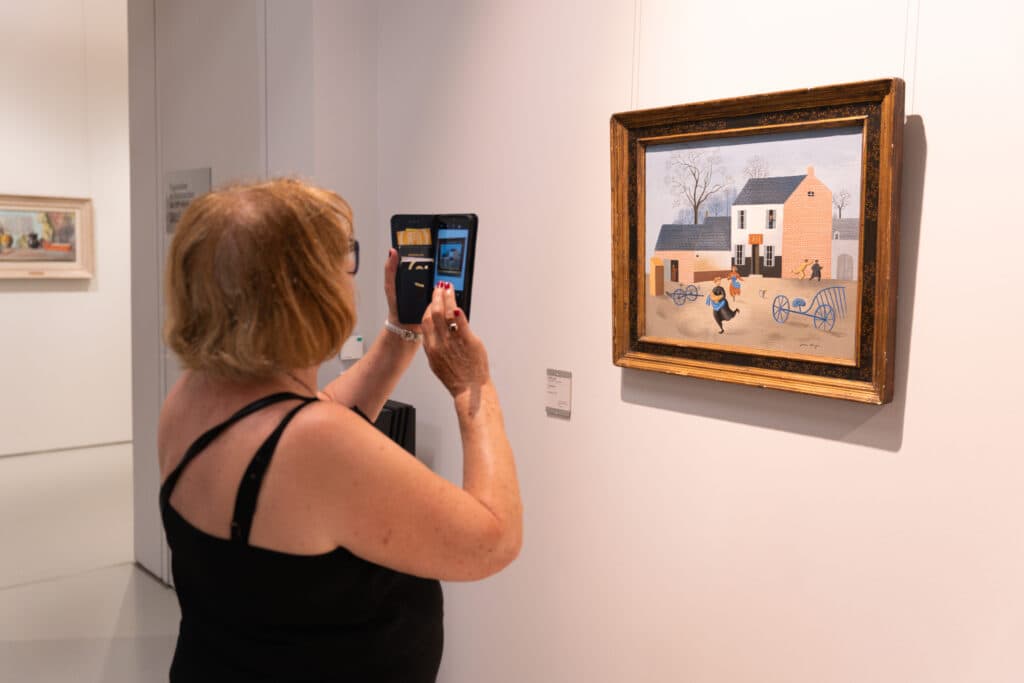
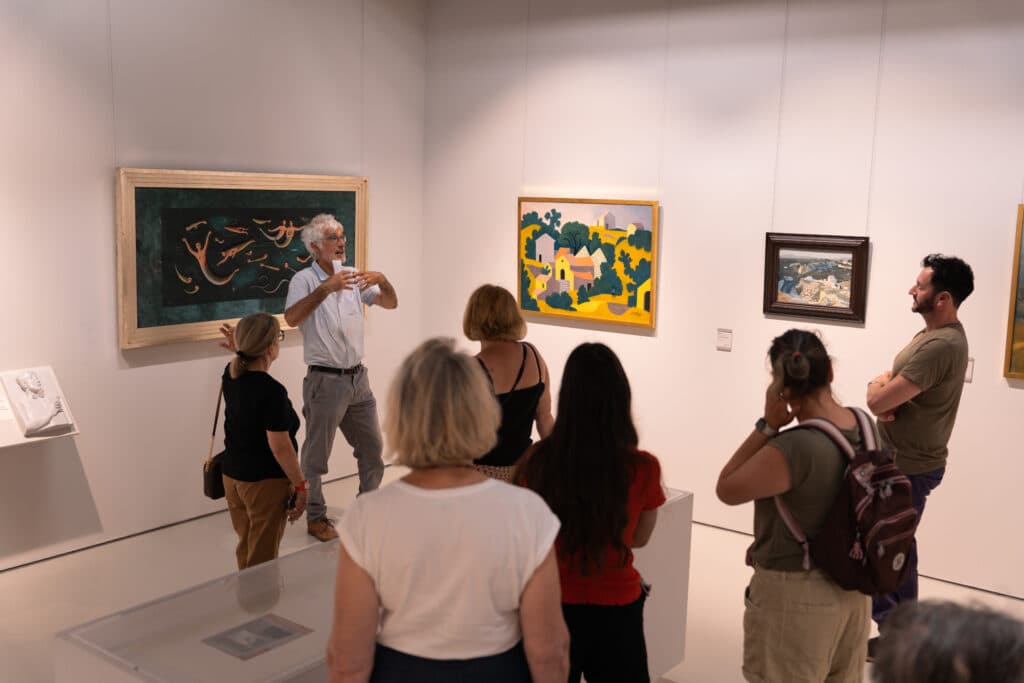
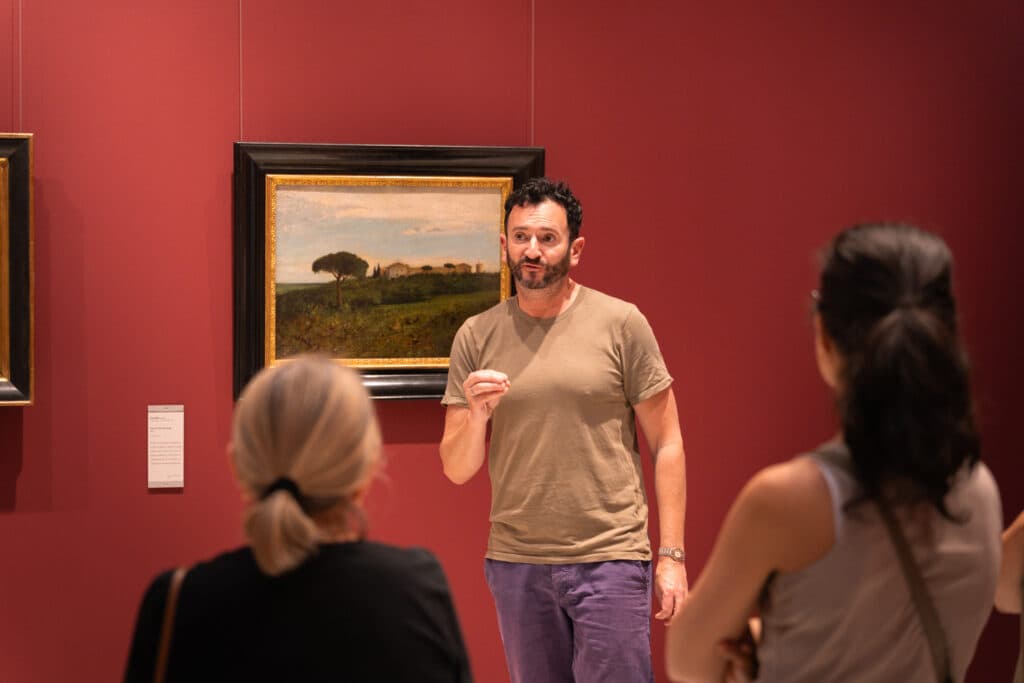
On May 27, the Musée Fabre, INRAE, and the Montpellier Metropolis organized an “art and science” event with the support of SWITCH: exploring the evolution of food systems in Montpellier and its region since the 19th century through the museum’s collection. A guided walking tour featuring two voices, mixing art history and agricultural science: David Cabot, a museum tour guide, and Jean-Marc Touzard, an INRAE researcher.
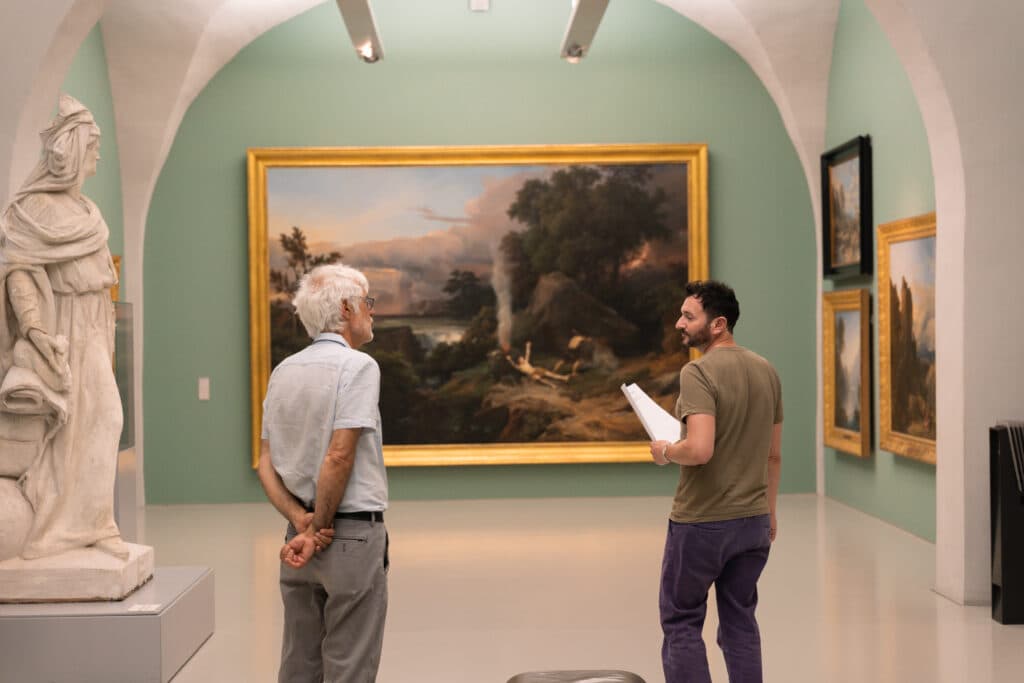
The paintings by Frédéric Bazille, a Pre-Impressionist painter from Montpellier, first immersed visitors in the history of viticultural specialization that shaped the 19th century: traces of Mediterranean integrated crop-livestock farming systems are still visible, for example in the famous painting “Vue de Village” (1862), where in the background stands the daughter of the manager of the Méric estate, owned by the painter’s father, who was also a botanist at the University of Montpellier. But the entire plain around Montpellier had become an “ocean of vineyards,” as highlighted in his painting “étude pour la vendange” (1868) and, earlier, in Courbet’s “La tour de Farges” (1857).
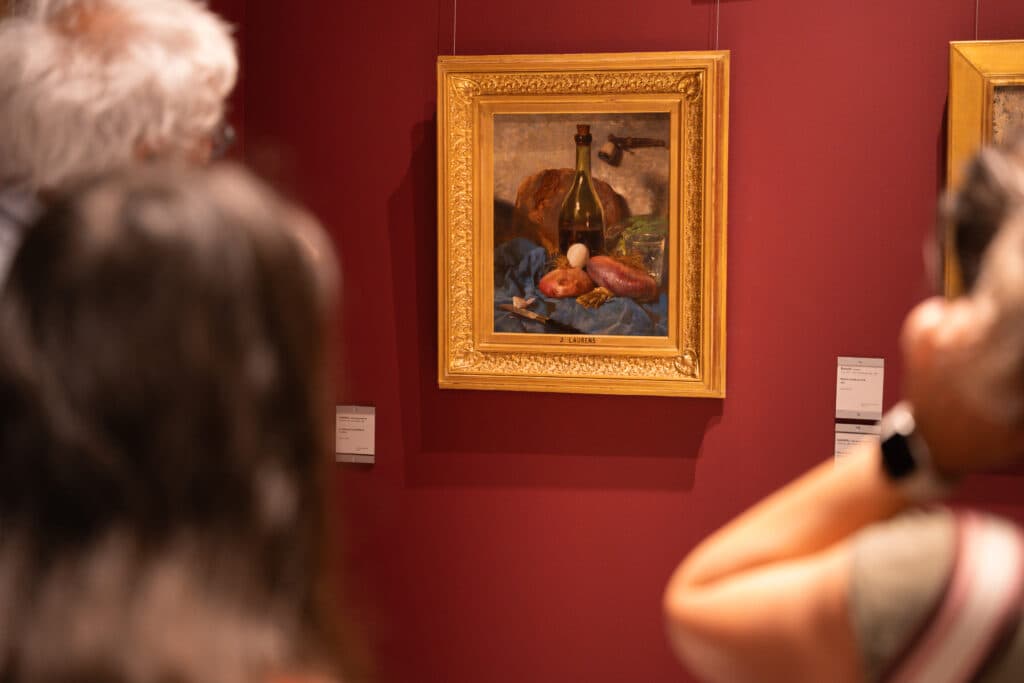
In the 19th century, the diet in Montpellier remained centered on bread, complemented by red wine, legumes, onions, squash, and seasonal fruits and vegetables. This is reflected in the series of still lifes by Laurens (1850), Bonvin (1858), and Matisse (1904). But the diet gradually diversified, became meatier, and took on an urban character, supplied by the national market and the railroad. It was a phenomenon happening throughout France.
The transformations in agriculture and food accelerated in the 20th century, as shown in Hugo’s series of paintings (1930, 1933, 1950, 1978). Mechanization, motorization, and then the uprooting of vineyards after the 1950s to make space for increasing urbanization. Today, against a backdrop of multiple crises (climate, economic, social), vineyards in the Languedoc area are being uprooted to restore agricultural diversification and reconnect the region to Montpellier’s food system. This marks, in a sense, the end of two centuries of wine-growing specialization, which is now being revitalized through agroecological initiatives studied and supported by the SWITCH project. Exploring the paintings in a museum can thus prompt reflection on current agricultural and food transitions !